Your basket is empty

Medical Cannabis in Switzerland: Prices, Products, and Access

Cannabis legalization
11.05.26
Medical cannabis is raising more and more questions in Switzerland. Between changes to the legal framework, the variety of products available, and differences in pricing and access requirements, it’s not always easy to navigate the system. Many people are primarily looking to understand what is permitted, what is not, how the medical process works, and what to expect in practice.
The purpose of this article is to provide a clear and accessible overview of medical cannabis in Switzerland. We avoid sensationalism and empty promises, focusing instead on factual and context-rich information. We cover the key aspects: the legal framework, the types of products available, expected costs, prescription procedures, and the role of healthcare professionals.
The goal is not to persuade or trivialize the issue, but to help people better understand a complex subject by providing reliable guidance to those who have questions—whether they are patients, family members, or simply curious to learn more.
What is medical cannabis?
When we talk about medical cannabis in Switzerland, we’re not talking about recreational use or a “wellness” product. We’re talking about a medical tool, used within a very specific framework, under a doctor’s supervision, with a prescription, and with regular follow-up.
In other words: it’s neither a luxury item nor something you decide to try on your own.
Medical cannabis is intended for patients whose condition has been evaluated by a healthcare professional and for whom cannabinoid-based treatment may be considered. It is part of a treatment plan, just like other medications, with clear guidelines and well-defined responsibilities.
This is also why it should not be confused with hemp-derived CBD products, such as CBD drops, which are available without a prescription. Medical cannabis contains THC, a cannabinoid classified as a narcotic, whose therapeutic use is permitted in Switzerland only under strict conditions. An article provides an overview of this topic: “CBD oil banned in Switzerland.”
In practice, this means one simple thing: medical cannabis cannot be purchased freely, cannot be chosen on a whim, and should never be used outside of a medical setting.
Definition and legislation in Switzerland
For a long time, access to medical cannabis in Switzerland was possible, but complicated. The process was cumbersome, time-consuming, and sometimes discouraging for both patients and doctors.
Since August 2022, things have changed. Swiss legislation has been amended to make access easier, while still maintaining strict regulations. Today, a doctor can prescribe medical cannabis directly, without having to go through a systematic exceptional authorization process. As for CBD, the framework is different: CBD is legal in Switzerland.
But be careful: simplification does not mean laxity.
Medical cannabis remains subject to the Narcotics Act and regulations governing therapeutic products. Every step is monitored: from the cultivation of the plants and the manufacture of the products to their distribution and final dispensing at pharmacies.
The entire system is overseen by Swissmedic, the Swiss authority responsible for drug regulation. Its role is to ensure that products meet high pharmaceutical standards, that cannabinoids are properly dosed, and that only authorized entities operate in the market.
For patients, the situation is actually quite clear:
• a doctor's prescription
• professional supervision
• dispensed at a pharmacy
• a clearly defined and medically supervised use
History of Medical Use
Cannabis has not always been completely excluded from the medical field. Long before modern bans, certain preparations were part of ancient therapeutic practices.
In Switzerland, the return of medical cannabis did not happen overnight. It developed gradually, in response to specific situations encountered by doctors and patients. The goal was never to normalize its use, but rather to better regulate it, clarify its legal status, and enhance safety.
Today, medical cannabis is viewed as one option among many, integrated into a personalized treatment plan. The doctor adjusts the dosage, selects the form of treatment, monitors progress, and reassesses the situation over time based on the observed results.
Every journey is unique, and nothing is set in stone.
Products available on the market
The Swiss medical cannabis market offers a variety of product types to accommodate the realities on the ground and the wide range of patient profiles. The choice of form is never arbitrary: it depends on the dosage, the method of consumption, and the patient’s daily routine.
Once again, these products have nothing to do with over-the-counter CBD products. Their legal status, intended use, and distribution channels are completely different. Our Floralpes flowers, for example, fall under the legal hemp regulations.
Cannabis flowers
Medical cannabis flowers come from authorized and strictly regulated crops. They are produced under specific conditions, with a focus on quality, consistency, and traceability.
These flowers contain specific concentrations of THC and other cannabinoids, in accordance with the medical prescription. In some cases, they can be used when their profile allows for fine-tuning of the treatment.
The decision is always made in consultation with the doctor, never on one’s own, and takes into account each patient’s specific circumstances.
Varieties and Effects
The strains used in medical cannabis differ primarily in their cannabinoid composition, particularly in the ratio of THC to cannabidiol. These differences can influence how the treatment is experienced, though they never constitute a promise or a guarantee.
It is therefore not a matter of “choosing what appeals to you,” but of selecting what fits best within a therapeutic framework established with a professional.
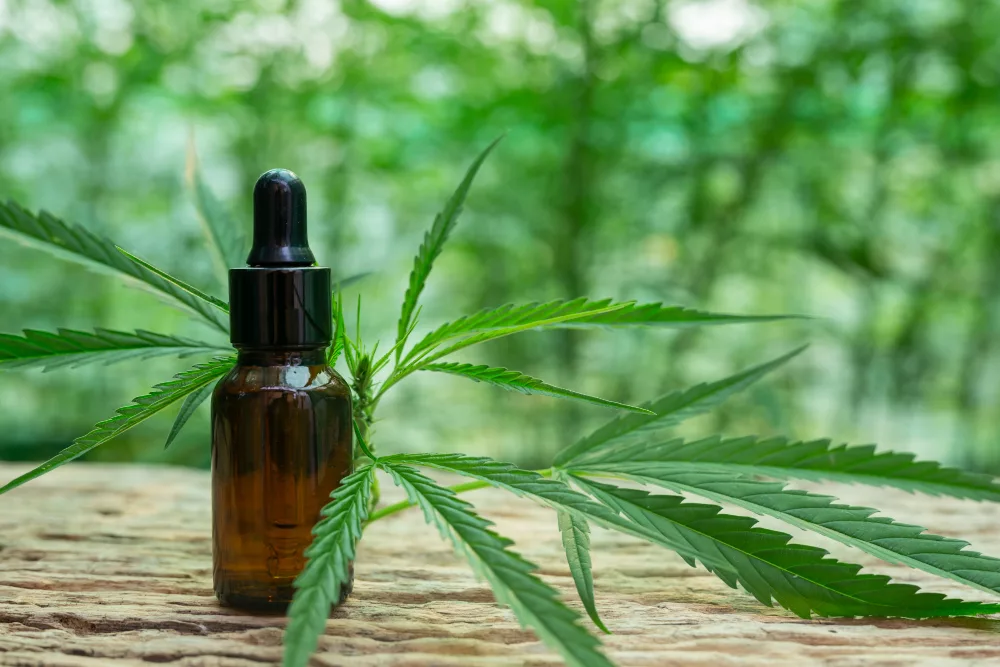
Oils and extracts
Medical cannabis oils and extracts are widely available in Switzerland. They are often preferred for their precise dosing and their ability to be adjusted over time.
Produced in accordance with strict pharmaceutical standards, these preparations may contain different ratios of THC and CBD, as prescribed. The oil serves as a vehicle for controlled administration, compatible with regular medical monitoring.
What consumption pattern should we consider?
In a medical setting, the method of administration is never left to chance. It is discussed with the doctor, taking into account:
• the product's shape
• dosage
• the patient's lifestyle
• the pressures of everyday life
The goal is simple: to ensure responsible use that is consistent with public health requirements and the Swiss regulatory framework.
Capsules and medications
Finally, certain cannabinoid-based medications and capsules are authorized in Switzerland. Their status is clear: a doctor’s prescription is required, there are specific indications for use, and, in some cases, insurance coverage may be available, subject to certain conditions.
These standardized formats integrate easily into the traditional pharmaceutical supply chain and provide a high level of safety and traceability for patients.

Price Comparison
The issue of cost is often one of the first concerns for patients interested in medical cannabis in Switzerland. And for good reason: unlike many conventional medications, the cost of medical cannabis can be a significant expense, varying from person to person.
There is no single price set at the national level. Prices depend on several factors, including the type of products prescribed, their form (flowers, oils, capsules), the dosage, and the distribution channel involved.
Costs by product type
In Switzerland, the price of medical cannabis varies mainly depending on the form prescribed:
• Medical cannabis flowers: These are typically priced by the gram. The cost may vary depending on quality, origin, growing conditions, and processing requirements.
• Oils and extracts: Their price depends mainly on the concentration of THC and cannabinoids, as well as the prescribed dosage. Oils allow for precise dosing, but their cost may increase over the course of treatment.
• Capsules and medications: These standardized forms often have more stable prices, but are still subject to current prescription requirements and approvals.
For a patient, the monthly budget can therefore vary significantly depending on the treatment prescribed by the doctor and any adjustments needed over time.
Factors affecting prices
Several factors explain the price differences observed in the Swiss medical cannabis market:
• cultivation and processing methods
• costs associated with distribution through pharmacies
• Administrative and regulatory compliance
The quality and origin of the products also play a key role in their price. Medical cannabis must meet high standards, both in terms of safety and consistency of dosage. These requirements have a direct impact on production costs and, consequently, on the final price for patients.
It is also important to note that medical cannabis in Switzerland operates within a highly regulated framework, which sets it apart from other non-medical or foreign markets.
Eligibility Requirements for Medical Cannabis
Access to medical cannabis in Switzerland is governed by a well-defined framework. It is not a product available over the counter, but rather a therapeutic option integrated into a structured medical pathway, with specific requirements that must be met.
What is the role of the prescribing physician?
Doctors play a central role in providing access to medical cannabis. They assess the patient’s condition, evaluate the relevant medical conditions, and determine whether treatment with cannabinoids is appropriate.
This decision is based on an individualized approach that takes into account the patient’s medical history, current treatments, and overall circumstances. Medical cannabis is thus one therapeutic option among others, integrated into a comprehensive care plan.
What is the statute of limitations procedure?
Medical cannabis is prescribed via a prescription, just like other controlled substances. The doctor determines:
• the product's shape
• the dosage
• Terms of Use
• monitoring requirements
The product is then dispensed exclusively by a pharmacy, in accordance with Swiss regulations and distribution rules.
How do prescriptions and reimbursement work?
The issue of reimbursement is often a deciding factor for patients. In Switzerland, medical cannabis is not automatically covered by basic health insurance. In some cases, reimbursement may be considered, but it depends on:
• the medical condition
• selected indications
• steps taken with insurance companies
Some supplemental insurance plans may offer partial coverage under specific conditions. Patients are therefore advised to contact their insurer directly to find out the exact terms and conditions that apply to their situation.
Common uses of medical cannabis
In Switzerland, medical cannabis is never considered a default solution. It is a regulated treatment option that is incorporated into a patient’s care plan when a doctor determines that it may be appropriate for a particular patient. Each situation is evaluated individually, on a case-by-case basis.
In other words, there is no standard approach. The use of medical cannabis varies greatly depending on the individual, their medical history, their daily life, and the goals established with their healthcare provider. What works for one person may not necessarily work for another.
What conditions are affected?
In the Swiss healthcare system, cannabis may be prescribed for various medical conditions when a doctor determines that it is a logical part of an overall treatment plan. These situations most often involve complex, sometimes chronic medical conditions that require close and regular monitoring.
It is important to keep in mind that medical cannabis is never presented as a one-size-fits-all solution. It can be incorporated into an existing treatment plan, as a complement to other treatments or medications, and always taking the patient’s overall profile into account.
The decision is based on a comprehensive medical evaluation that takes into account the patient’s entire medical history, rather than a single isolated symptom.
What is the recommended dosage?
Dosing for medical cannabis is a key aspect of patient care. It is determined by the prescribing physician and may change over time. The goal is not to reach a “standard” dose, but to find a balance tailored to each patient, based on the form of the product, its cannabinoid concentration, and the conditions of use.
In practice, adjustments are made gradually. The doctor monitors the patient’s progress, discusses it with them, and makes adjustments as needed. This approach allows the treatment to be integrated more smoothly into daily life, while maintaining a safe medical framework.
Considerations for each patient
Every patient’s situation is unique. Age, lifestyle, current treatments, and personal or professional constraints all play a significant role in how medical cannabis is integrated into a patient’s care plan.
This is precisely why monitoring by a healthcare professional is essential. It allows for regular check-ins, discussions about the patient’s experiences, and ensures that the use of medical cannabis remains consistent with the therapeutic goals established together.
Frequently Asked Questions from Patients
Medical cannabis is still a relatively new topic for many people. It therefore naturally raises questions—and sometimes doubts. Here are some frequently asked questions.
What are the side effects?
Like any treatment prescribed in a medical setting, medical cannabis may cause side effects in some people. These effects vary depending on several factors: dosage, the form of the product, individual sensitivity, and the overall medical context.
That is precisely whyaccess to medical cannabis is strictly regulated. Medical supervision allows for adjustments to the treatment as needed, helps anticipate certain situations, and ensures that medical cannabis remains compatible with the patient’s health condition and other ongoing treatments. Learn more: medical CBD.
How do I choose the right product?
The choice of a product is never based on a personal decision made alone. It is made in consultation with the doctor, who takes several factors into account:
• overall medical condition
• the selected indications
• the proposed dosage
• the most suitable form (flowers, oils, capsules)
The healthcare professional’s role is precisely to guide the patient in this decision, in order to propose a solution that is consistent with their treatment plan, while complying with Swiss pharmaceutical and regulatory standards.
The Future of Medical Cannabis in Switzerland
In Switzerland, medical cannabis didn’t arrive overnight. It took hold slowly, cautiously, almost on tiptoe. And even today, it continues to find its place, without haste, within a healthcare system that is moving forward methodically.
For patients, medical cannabis is neither a miracle cure nor a one-size-fits-all solution. It is a regulated option, considered in certain situations following consultation with a healthcare professional. It is an option that forms part of a comprehensive, well-thought-out treatment plan that is often adjusted over time.
This deliberately measured stance is a true reflection of the Swiss approach: moving forward with a serious and thoughtful approach, without trivializing the issue, and always keeping medical judgment at the forefront.
Possible legislative changes
As for the authorities, the watchword remains the same: caution.
Rather than making a series of rapid changes, Switzerland favors gradual adjustments designed to clarify the existing framework and make it easier to understand for both patients and healthcare professionals.
In the future, developments may focus primarily on:
• provide better guidance on prescribing practices
• improve understanding of care pathways
• specify the rules for distribution and authorization
• and, perhaps, change certain insurance reimbursement policies, which are still very limited today
The idea is not to throw the doors wide open, but to build on what already exists, while constantly focusing on the security and consistency of the system.
Impact on patients and the market
For patients, these changes could above all provide greater clarity. Knowing what to expect, understanding the process, and identifying the role of each person involved are all factors that help patients approach medical cannabis with greater peace of mind.
In the market, the medical cannabis sector continues to be shaped by high standards. Product quality, traceability, a strict regulatory framework, and oversight of cultivation and distribution conditions: these requirements are shaping a professional, responsible, and sustainable industry.
Over time, medical cannabis could thus become more naturally integrated into the Swiss healthcare landscape—not as a one-size-fits-all solution, but as a clearly defined, regulated option used when appropriate as part of a patient’s care pathway. Our section closely monitors CBD legislation in Switzerland.
By remaining true to this approach—rigorous, compassionate, and responsible—Switzerland continues to move forward at its own pace, with a simple goal: to place medical decision-making, and the patient, at the heart of the system.
Written by johannboschung